Learning Outcomes
i. Identify the major components of a bacterial cell and explain their functions.
ii. Understand the structure and composition of the bacterial cell wall, distinguishing between Gram-positive and Gram-negative bacteria.
iii. Recognize the diverse shapes and sizes of bacteria and their significance for their function and survival.
Introduction
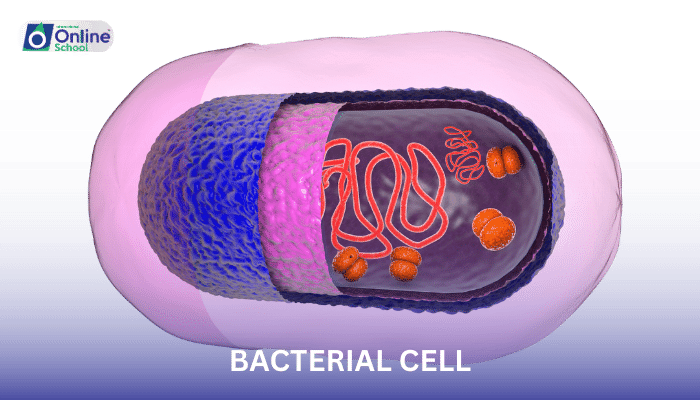
Bacterial cells are remarkably complex and organized structures, despite their simple prokaryotic nature. They possess a unique cell envelope that provides protection, support, and a selective barrier. The cell envelope, the outermost layer of the bacterial cell, consists of two main components: the cell membrane and the cell wall.
i. Bacterial Cell Wall: The cell wall is a rigid layer that surrounds the bacterial cell membrane, providing structural support, protection from osmotic stress, and preventing the cell from bursting. It also plays a role in cell shape and adhesion to surfaces.
Gram-positive Cell Wall: Gram-positive bacteria have a thick cell wall composed primarily of peptidoglycan, a complex polymer made up of amino acids and sugars. The peptidoglycan layer is responsible for the Gram-positive stain reaction, where Gram-positive bacteria retain the crystal violet dye after Gram staining, appearing purple under the microscope.
Gram-negative Cell Wall: Gram-negative bacteria have a thin cell wall composed of a single layer of peptidoglycan surrounded by an outer membrane. The outer membrane contains phospholipids, lipopolysaccharides (LPS), and proteins. The LPS layer gives Gram-negative bacteria their characteristic Gram-negative stain reaction, where they lose the crystal violet dye and appear pink or red under the microscope.
ii. Bacterial Shape and Size
Bacteria exhibit a remarkable diversity in shape and size, ranging from spherical (cocci) to rod-shaped (bacilli) to spiral (spirilla) and curved (vibrios). Their shape and size are often related to their function and survival. For instance, cocci are often found in clusters, facilitating the exchange of genetic material, while rod-shaped bacteria are well-suited for movement, and spiral-shaped bacteria can move efficiently in viscous environments.
Bacterial size is typically measured in micrometers (µm), with most bacteria ranging from 0.2 to 10 µm in length. However, some bacteria, such as certain spirochetes, can be significantly larger, reaching up to 500 µm in length.
Bacteria exhibit a remarkable diversity in cell structure and composition, reflecting their adaptability to a wide range of environments. The bacterial cell wall, with its unique components and variations in Gram-positive and Gram-negative bacteria, plays a crucial role in providing structural support, protection, and selective permeability. Bacterial shape and size also contribute to their function and survival, reflecting their evolutionary adaptations to diverse ecological niches. Understanding the detailed structure and composition of bacterial cells is essential for appreciating their biology, their role in ecosystems, and their potential applications in biotechnology and medicine.
